
Feverfew has been used in Europe for centuries as a herbal medicine for migraine headache, fever, joint pain and arthritis.
Feverfew (Tanacetum parthenium) is a member of the sunflower family, native to Europe. The name feverfew comes from a Latin word meaning “reduce fever”. Feverfew was mentioned by a Greek herbalist Dioscorides in the first century AD. He recommended feverfew for treating hot inflammations and swellings. Traditionally, feverfew is used to treat headaches, arthritis, fevers, indigestion, colic, diarrhea, abortion and menstrual cramps. Feverfew also has long been used to repel bees and various insects. It has a powerful aroma.
Studies Show That Feverfew Helps Reduce Headaches
Scientific studies have shown that feverfew can help reduce migraine headaches. It can be used as a pain reliever. Studies indicate that feverfew reduces the frequency and severity of headaches, as well as the related symptoms such as dizziness, nausea and vomiting. A study in Great Britain found that more than 70% of 270 patients with migraines felt improvement after taking 2-3 fresh feverfew leaves daily.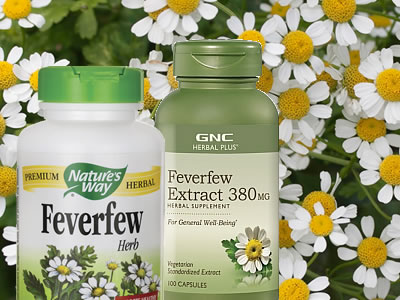
Recently, feverfew is also used to treat rheumatoid arthritis and joint pain, but more evidence is needed from well-designed studies to confirm the effectiveness.
Feverfew contains a compound called parthenolide. Parthenolide is said to help reduce inflammation, which contributes to a range of ailments, including migraines, fevers, and rheumatoid arthritis.
How to Use Feverfew
1. Chew fresh leaves
– Chewing 2-3 fresh feverfew leaves per day
2. Feverfew infusion
– Put a few fresh or dried feverfew leaves in a cup
– Pour boiling water over it
– Steep for 10 minutes
– Drink it, 2-3 times a day
3. Supplements: capsules, tablets, and liquid extracts and tincture
– Follow the directions on the product label
Please note, although no serious side effects have been reported for feverfew. But over dose or long term use may cause abdominal pain, mouth ulcers, loss of taste, allergic reactions and the risk of bleeding. You should consult your doctor before using feverfew as a remedy.
Read more information about natural remedies for migraine.


